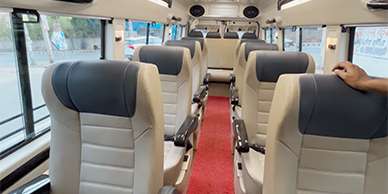
In this guide
Start with the shift and route requirement
Monthly employee transport should be planned from the route and shift requirement, not from a daily tourist hire price multiplied by the number of days. Give the office address, reporting gate, shift start and finish, operating days and the approximate passenger count for each route. Separate morning pickup from evening drop and list any second or rotating shift so the operating pattern is clear.
Share proposed boarding areas and the expected passenger distribution. Individual employee home addresses can be discussed privately during route planning; they do not need to appear in a public enquiry. Ask whether common boarding points or a different pickup pattern is workable for the requirement. The operator should review the route, vehicle suitability and duty before confirming the plan.
Delhi, Gurgaon, Noida, Faridabad and Ghaziabad locations can involve different approach roads and timing constraints. State the actual office gate and boarding points rather than only a city name. Office reporting must allow time for the pickup sequence and boarding. Do not promise a fixed journey duration without reviewing traffic patterns and the intended shift timings.
Match each route to its passenger and vehicle needs
A car may be considered for a small team or a separate business duty, while Tempo Traveller and bus categories can be evaluated for larger staff routes. Urbania can be requested for a particular group requirement, but its commercial suitability for a recurring contract should be reviewed against the offered configuration, route and budget. Ask for options instead of assuming that one category is right for every office.
Confirm usable passenger capacity, boarding needs, bags and the offered seating layout. Attendance can vary by weekday or shift. Identify the normal and maximum headcount, then discuss how additional passengers will be handled. Seats must not be assumed available beyond the confirmed capacity. If a route grows, review a larger category or an additional vehicle with revised terms.
For a route with narrow streets or multiple residential pickups, discuss a suitable boarding point and practical vehicle size. A larger bus can reduce the number of vehicles but may be unsuitable for the final approach. Ask for route review before the contract is agreed and record the approved stops. Do not add a new residential detour informally without checking its effect on duty, cost and reporting time.
Define the monthly billing basis clearly
The quotation should explain the operating days, shifts, kilometres, duty hours and vehicle category included in the monthly amount. Ask whether weekends, public holidays or overtime shifts are included. Clarify any minimum billing and whether a vehicle remains reserved between shifts. A contract for one fixed return route is not directly comparable with a vehicle available for several routes throughout the day.
Request a written breakdown of taxes where applicable, road charges, parking, permits and driver-related expenses. Ask how additional kilometres, extra duty, special days and temporary route changes are charged. If the office expects a price review during the contract, discuss the basis and notice process before signing rather than assuming that the initial price will remain unchanged under all conditions.
Set out invoice frequency, supporting duty records, payment dates and the people authorised to approve extra work. Clarify how a missed operating day, planned office closure or change in headcount is handled commercially. A clear monthly quote should describe both the regular service and the process for exceptions. Confirm those details before committing the office’s budget.
Daily coordination, changes and escalation
Assign an office transport coordinator and agree the channel for operational updates. Employees should receive the confirmed boarding point and reporting time. The office needs a process for late passengers, attendance changes and shift revisions. The vehicle should follow the agreed duty rather than receiving conflicting instructions from several people on the same route.
Ask the operator how delays, vehicle changes or a breakdown would be communicated and managed for the contract. Review the proposed contingency arrangements in writing. Do not assume a dedicated standby vehicle, live tracking, particular personnel checks or a response-time commitment unless those features have been agreed for the requirement. If your organisation needs them, request them as explicit contractual conditions.
Maintain a simple duty and incident record so repeated delays or unsuitable stops can be reviewed. Route changes should be approved through the named contacts and recorded with any commercial revision. When employees join or leave a route, review capacity and the stop sequence. Small changes made repeatedly without review can alter a route substantially over a month.
Review requirements before starting the contract
Share the documentation and operating requirements your organisation needs the provider to satisfy. This may involve its own procurement, insurance, vehicle or driver review process. Ask for current applicable documents and confirmations through the approved business channel. Do not treat a website statement as a substitute for the checks your organisation requires for the actual contract.
Before commencement, confirm the approved routes, stop list, shift timings, vehicle category, escalation contacts, billing basis and effective service period. Where appropriate, discuss a route review or trial arrangement and its terms. Any trial, performance measure, replacement commitment or termination condition should be agreed rather than assumed. Keep the accepted proposal and operating brief together.
For an office already using monthly Tempo Traveller hire in Gurgaon, compare the existing route brief before creating another overlapping contract. This Delhi NCR page is intended to help specify staff pickup/drop requirements across route areas; the Gurgaon monthly service page remains relevant for that specific enquiry. Share your office location and shifts so the quotation can be directed to the appropriate service.
Compare Car, Tempo Traveller, Urbania and Bus Options
Use the options below to discuss your actual passenger, luggage and duty requirement. Category images do not confirm the vehicle assigned to your booking. Request current vehicle photos, seating details and a complete quotation on WhatsApp or email.

Car with Driver
Small parties, individual guests and a separate transfer duty. Confirm the offered model, passenger capacity and luggage space.
Tempo Traveller
Family and team movement. Ask for the available seating layout and luggage arrangement for your duty.
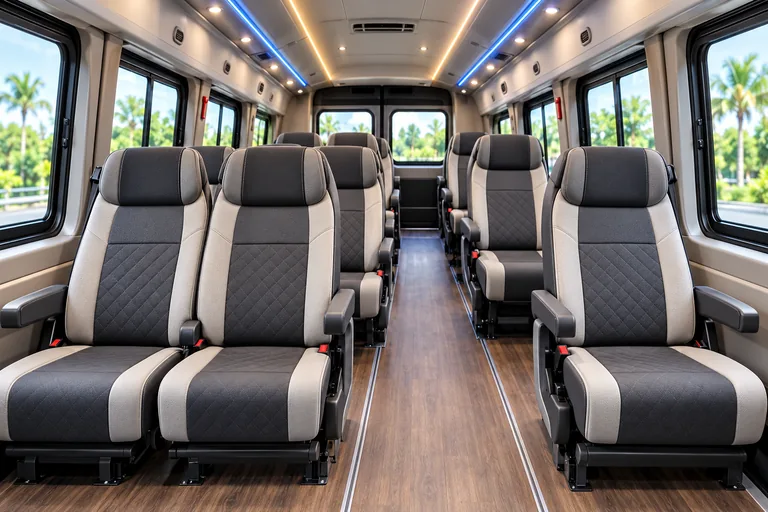
Force Urbania
Private group travel with the offered configuration confirmed before booking. Compare passengers, bags and access.
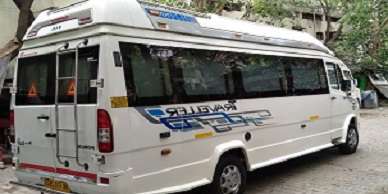
Bus and Mini Bus
Larger organised groups and shuttle duties. Review passenger capacity, parking and the final approach.
What to Ask in Your Written Quotation
| Booking item | Confirm before payment |
|---|---|
| Vehicle | Category, offered seating configuration, usable capacity, luggage and availability for the duty. |
| Route and duty | Reporting point, stop sequence, operating dates, included hours/kilometres and final drop. |
| Payable charges | Full quotation, tax treatment, tolls, parking, permits and driver expenses where applicable. |
| Extra work | Waiting, additional trips, night duty, route changes, extra kilometres/hours and extensions. |
| Booking terms | Advance and balance, written acceptance, cancellation, changes and coordination contact. |
There is no single accurate price for every duty. Share the complete requirement and compare quotations on the same basis. A brief vehicle price should not be presented as an all-inclusive total unless every inclusion and separately payable item is clear. Ask what changes the amount if the itinerary, timing or vehicle requirement changes.
Before paying, retain the accepted itinerary and quotation with your payment receipt. Confirm the reporting instructions and the process for sharing assigned vehicle and coordination details. An online enquiry or a WhatsApp draft does not reserve a vehicle. Availability and booking acceptance must be confirmed through the agreed written process.
Prepare a Employee Pickup and Drop Service in Delhi NCR Enquiry
Enter the essentials below to prepare an enquiry for WhatsApp or email. This form prepares a draft; you choose whether to send it.
Frequently Asked Booking Questions
What information is needed for a monthly quotation?
Office gate, boarding areas, shifts, operating days, passenger counts, vehicle preference and required contract period.
Can routes or headcounts change during the month?
Changes need route and capacity review and may affect the quotation. Agree an approval and price revision process before service starts.
Are tracking and standby vehicles included?
Do not assume either. Request the arrangements your organisation needs and confirm the accepted provisions in the contract.
Is a tourist day-hire rate a monthly staff transport quote?
No. Recurring shift duty needs its own operating and billing assessment, including working days, shifts and route obligations.