In this guide
Choosing a Tempo Traveller size begins with two counts: people and bags. A group with eight passengers and large suitcases can need a different arrangement from twelve people carrying only small day bags. Seat labels are useful starting points, but they do not explain the actual layout, permitted passenger capacity, entry comfort or storage. Ask those questions before choosing the lowest quote.
This guide helps you compare 9, 12 and 17-seater Tempo Traveller descriptions for airport transfers, local sightseeing, weddings, corporate outings and outstation holidays from Delhi. It explains what the labels can leave unclear and how to request a vehicle that suits the complete journey. Availability and layouts must be confirmed for the unit offered; this is not a promise that every size or feature is available for every date.
Confirm whether the driver is included in the seat label
Ask a direct question: how many passenger seats are available, excluding the driver? Different rental descriptions may use seat numbers differently. The answer should match the actual permitted passenger capacity and cabin arrangement. Do not count the driver seat as a passenger place or assume that a larger label automatically accommodates every member of the group.
Explain adults, children and any child restraint needs before confirmation. Every traveller needs an appropriate permitted passenger arrangement. Do not build the booking around sharing seats, sitting in an aisle or adding people beyond capacity. If the headcount changes, tell the operator before departure so a suitable revised arrangement can be assessed.
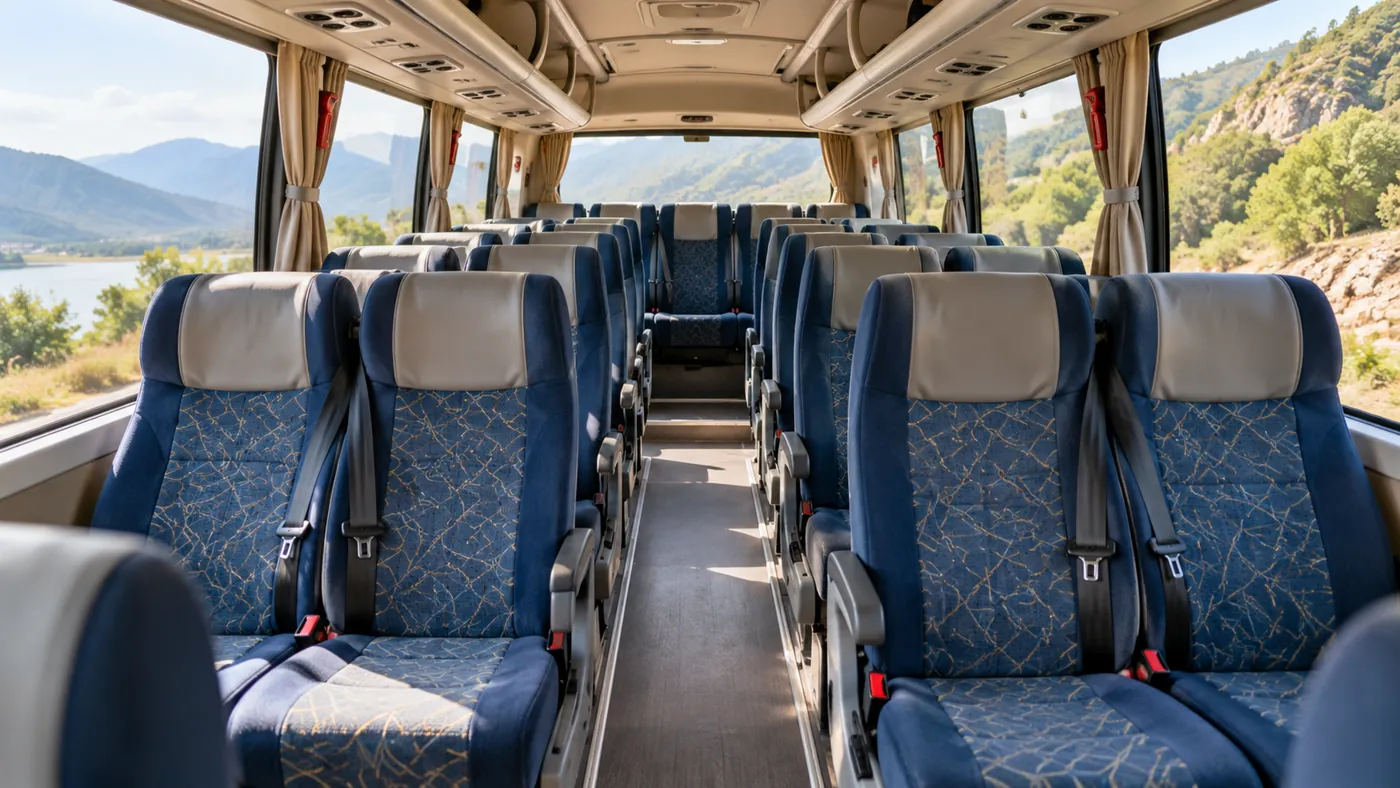
Ask for recent photographs of the actual proposed layout, including the rear row and luggage space. A stock exterior image cannot prove the seat arrangement inside. If a vehicle uses a modified or reduced-seat cabin, confirm the permitted capacity and practical features. The name Maharaja or luxury does not explain those details on its own.
A nine-seat description: smaller group, specific layout
A vehicle offered with nine passenger places may suit a smaller family or friends' group that wants to remain together. Some reduced-seat layouts are chosen for a different cabin arrangement, but extra comfort should be checked through photographs and specific details. Ask about individual seats, spacing, reclining where important and how the luggage is stored.
For a day outing, the group may carry only small bags. For an airport or multi-day duty, the same headcount can bring considerably more baggage. Do not assume the smaller passenger count automatically creates a dedicated suitcase area. Confirm where bags go and whether all passenger places remain usable without blocked entry or aisle space.
If you are comparing a 9-seater Maharaja Tempo Traveller, ask what layout is offered for your dates. The booking decision should include the full route and bags rather than rely only on the category title. If the group grows, request a revised vehicle instead of hoping extra passengers will fit at pickup.
A twelve-seat description: common group planning questions
A twelve-passenger arrangement can be considered for an extended family, friends or an organised outing when the actual layout suits the journey. Check whether all rows have the seating features you need and whether the rear seats differ. An aisle, entry steps and working seatbelts deserve attention just as much as the front-row photograph.
For a long journey, ask about space with the agreed bags on board. Twelve passengers with one suitcase each are different from twelve guests travelling to a local function without luggage. Share bag sizes and any stroller or equipment. If storage is unclear, resolve it before comparing prices or paying an advance.
See 12-seater Tempo Traveller hire in Delhi as a starting enquiry page. Confirm passenger capacity excluding the driver, current photographs and the total duty quote. A group should also agree on pickup sequence, meals and sightseeing pace, because a suitable vehicle cannot solve an itinerary with conflicting expectations.
A seventeen-seat description: clarify capacity and storage
When a listing uses seventeen seats, ask exactly what that means for passengers and the driver. Confirm the permitted seating and layout of the assigned vehicle rather than assuming every description is identical. Larger groups also need a more organised boarding and attendance process, especially with several pickups or separate return batches.
More seats do not automatically mean more luggage room per person. Ask how many large bags can be accommodated in the proposed arrangement and where they will be stored. If roof storage or another arrangement is suggested, confirm its suitability, weather protection and relevant restrictions. Bags should not obstruct the aisle, seats or exits.
For larger parties, compare a suitable mini bus or bus as well as Traveller options. A different category can be more practical when passengers, suitcases and the itinerary exceed the offered cabin's comfortable arrangement. Review bus rental in Delhi and discuss the actual group requirement without treating a seat-number search as the only possible answer.
Why luggage must be counted separately
Make a simple list of large suitcases, medium cases, cabin bags, backpacks, strollers and equipment. Give approximate sizes where useful. A group arriving after an international flight may carry substantially more than a local sightseeing party. Wedding transfers can include clothing bags or gifts, while corporate duties may include presentation equipment or boxes.
Ask the operator to describe the storage plan for that list. “Luggage allowed” is too vague when the vehicle will be full. Confirm whether bags remain separate from passenger movement and whether loading and unloading need extra time. If one traveller brings unusually bulky items, mention them before assignment rather than when the vehicle arrives.
Keep only essential small bags in the cabin where they can be carried appropriately. Do not use the aisle as a luggage shelf or place loose items where they obstruct entry. The storage arrangement should preserve the agreed seats and usable access. The Delhi Airport pickup guide explains why the bag count often decides airport vehicle choice.
Local sightseeing: time and access matter
For a local Delhi outing, provide the places you want to visit and the approximate reporting and finish times. Ask about the package's time and distance allowances and the extra-use rule. A group can spend many hours at attractions while driving relatively few kilometres, so waiting and duty duration belong in the quotation.
Agree authorised drop and reunion points. A larger vehicle may park away from a monument, market or pedestrian area. Decide who checks attendance and how the group contacts the coordinator. Several unplanned pickups across the city can use much of the morning; a common accessible meeting point may work better.
Choose the seating according to the actual passengers even when the journey is short. Short duty does not justify exceeding capacity or ignoring practical access needs. Share children, seniors and any mobility concerns. Ask about steps and the cabin arrangement before confirming rather than expecting a category title to guarantee suitability for everyone.
Airport transfers: bags, flights and waiting
An airport enquiry should include flight date, number, confirmed terminal, passengers, bags and the destination. Ask for the current authorised pickup process and waiting terms. The landing time is not necessarily when the group will be ready to board. Baggage collection, immigration where relevant and walking to the meeting point need their own allowance.
For multiple flights, decide whether one vehicle waits for everyone or separate transfers are more practical. Different arrivals can create substantial waiting even when the total headcount fits a single vehicle. Confirm parking and extra waiting costs as well as the seating. Additional hotel drops should be part of the quote.
If guests are departing, provide airline reporting guidance and allow a sensible traffic buffer from the actual pickup address. A full vehicle needs time for loading and an attendance check. Appoint one coordinator so the driver receives one clear departure instruction rather than several conflicting messages.
Outstation holidays: choose for the whole itinerary
A long-distance holiday makes entry comfort, row spacing, storage and reasonable breaks especially important. Ask whether the assigned features are functioning and whether the itinerary allows a sensible daily pace. A roomier cabin cannot compensate for a plan that adds unnecessary destinations or expects long transfers followed by extensive sightseeing.
Provide all nights, hotel addresses, sightseeing and final drop. Hill properties can have narrow or restricted approaches, so ask whether the vehicle reaches the accommodation or needs an agreed local transfer. Do not assume one group vehicle can access every viewpoint or pedestrian attraction. Quote any separate arrangement before booking.
For an example route, review the Delhi to Manali transport guide or Nainital and Bhimtal family plan. These explain how driving time, local access and luggage influence the vehicle decision. Choose the size for the complete journey rather than only the first transfer.
Weddings and corporate groups
A wedding duty needs pickup batches, venue gates, reporting times, waiting location and return arrangements. The vehicle that fits one arrival batch may not cover two overlapping duties. Decide whether guests return together or in separate trips and ask the quote to show the full schedule. Explain any clothing bags or equipment.
For corporate travel, provide the office or hotel entrance, event timing, passenger count and invoice requirements through the booking channel. Repeated shuttles should be specified rather than treated as an assumed addition to a one-way transfer. If different teams finish at different times, plan the vehicle allocation before the event.
For either use, name one coordinator and keep an accurate attendance list. A reserve passenger count can be useful when requesting options, but the final permitted arrangement must be confirmed. If numbers remain uncertain, ask when they need to be finalised and how a change affects availability and cost.
How to compare size and price fairly
Request the same dates, route, passengers and bags for every quote. Record the actual passenger capacity, cabin layout and storage alongside the total. A smaller offer without enough luggage space is not equivalent to a larger suitable arrangement. Ask about tolls, parking, driver allowance, minimum distance if applicable and extra duty.
If comparing Urbania too, use the Tempo Traveller versus Urbania guide. Confirm the offered variant and whether the seat label includes the driver. The model name and a promotional description should not replace actual capacity checks. Keep essential features and acceptable substitutions in the confirmation.
Read the outstation cab extra-charge checklist before paying. A written quote should explain the calculation, included items, variable costs, advance and cancellation terms. The best vehicle is the suitable confirmed arrangement at a clear price, not automatically the largest or the cheapest category.
Check the arrangement together at reporting
At pickup, compare the passenger and baggage arrangement with the confirmation before the journey begins. Check that the group can board comfortably and that bags are stored in the agreed area without blocking movement. If the layout differs from the essential requirements, contact booking support before proceeding. Do not wait until the first long transfer to discover an unresolved seating issue. Give the coordinator the final headcount and explain any newly added bulky item. The check should be practical and calm, based on the agreed requirements rather than assumptions from an online category photograph.
Frequently asked questions
Which size should a family of nine book?
Confirm nine appropriate passenger places excluding the driver and then check the baggage requirement. A nine-passenger group with large suitcases may need a different layout or larger suitable vehicle than the same group on a local outing.
Does seventeen seats always mean seventeen passengers?
No. Ask whether the driver is included in the label and confirm the actual permitted passenger capacity. Rental descriptions can vary, so the written confirmation should be explicit about passengers and layout.
Is a Maharaja layout always more spacious?
Do not assume it from the name. Ask for current photographs, seat arrangement, storage and the features important to the group. A reduced-seat layout may differ, but its practical suitability must still be checked.
Can bags be placed in the aisle?
Plan storage that leaves the aisle, entry and exits clear. Tell the operator about suitcases and bulky items before assignment. Do not rely on filling passenger movement areas when the group boards.
Can children share seats to reduce vehicle size?
Do not plan around extra travellers sharing seats. Explain adults, children and restraint requirements and request an appropriate permitted arrangement. If the group increases, ask for a revised suitable vehicle.
When should we choose a bus instead?
Compare a suitable bus when group size, luggage or duty requirements exceed the offered Traveller arrangement. Provide the full itinerary and access needs so the operator can discuss realistic options and costs.
Request the right group vehicle
Udan Travel operates under the registered trade name Udan Travel Ind Services. Use Tempo Traveller hire in Delhi to send dates, pickup, drop, passengers, luggage and the full duty. Request current photographs and a written quote, then confirm capacity, features, storage and booking terms before payment.